40. Popped Questions, Contraband, and Mr. X — Opon and Manila, Philippines — Feb 24 – 28, 1938

The day-to-day journal

Be sure to read all of this one, as it has some extra juicy parts. But they’re peppered about, so don’t skip.

Thur. Feb. 24: Talked to the new passenger — been mining engineering, new mining laws giving Gov't right to confiscate mines and equipment is scaring out foreign capital. Large gold mines, very large manganese and chromate (used in autos) mines, the former shipped to Japan. 

Says Quezon asked for independence to keep his bread buttered on both sides, is now afraid his bluff will be called. As soon as U.S. moves out, Japan will move in.

Side note: The Philippines was (and is) a land of mineral richness, and grabbing hands near and far have wrestled for it. This new passenger, the mining engineer, could be one of them. She could maybe find out by mining him for information. Get it??

When you Google ‘Quezon’, a place pops up first, but in 1938, Helen and the mining engineer were discussing a person named Manuel L. Quezon, who was the first Filipino president of the commonwealth of the Philippines, and who was very popular. And because of him, there is also now a place.

And Japan did indeed ‘move in’ a few years later, as they did a lot of places in the region then, but certainly not without a fight.

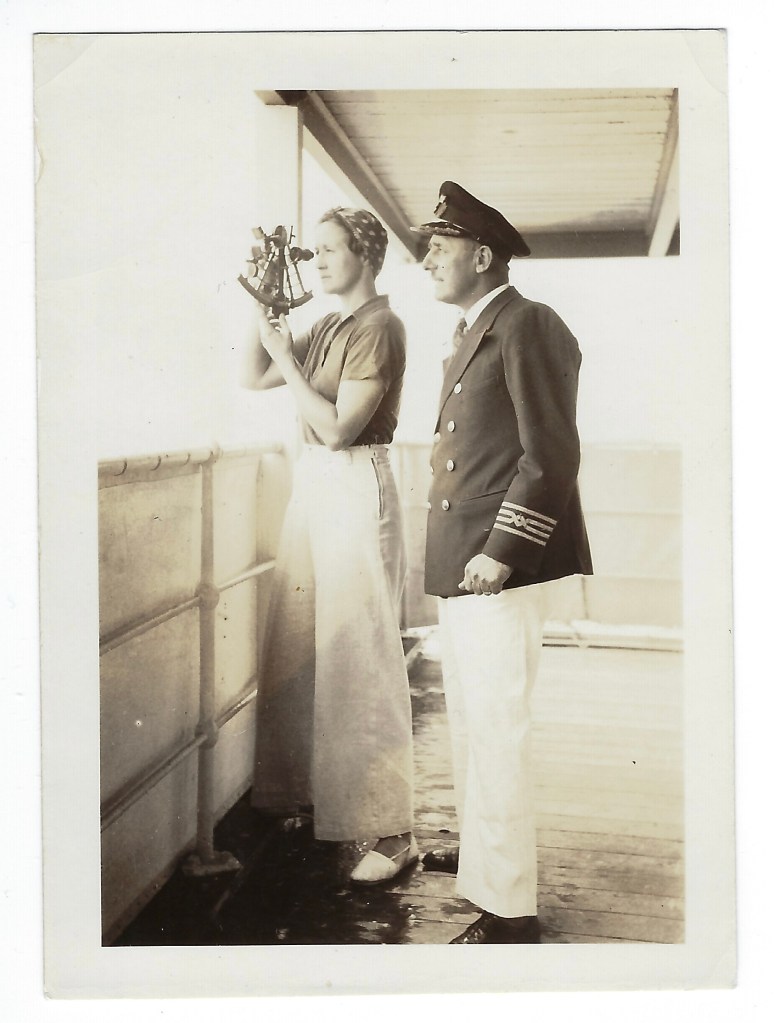
Sailed about 4:30. Had no escort like the Army transport that went out at noon with a bomber circling. Took some pictures of the harbor, warships, submarines. 

A U.S. sub came up asking who we were, were going (our 'not under command' signal was up).

Side note: I envision a Nessie like submarine scope slowly breaching the waters; its face slowly turning until it stops… and then zooms in on the M.S. Silverwillow, who is guilty of having a not under command light on. Wait though, how would an underwater vessel know if an abovewater vessels’s signal was up??

I don’t have the pictures she took, but the one below is from the same time and place.
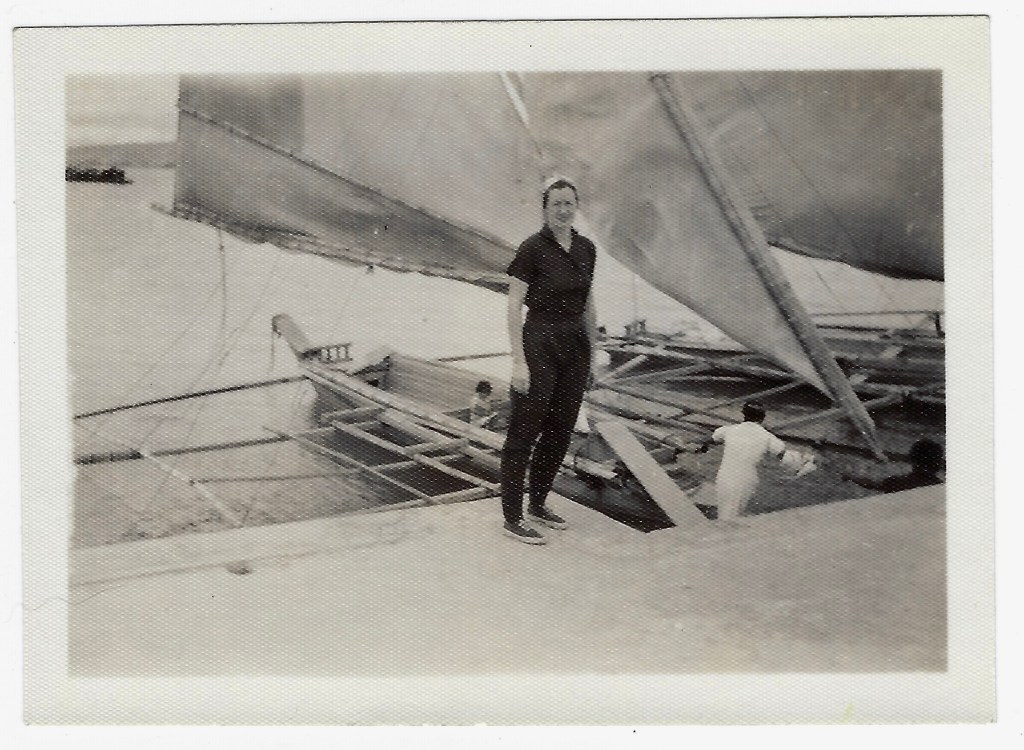
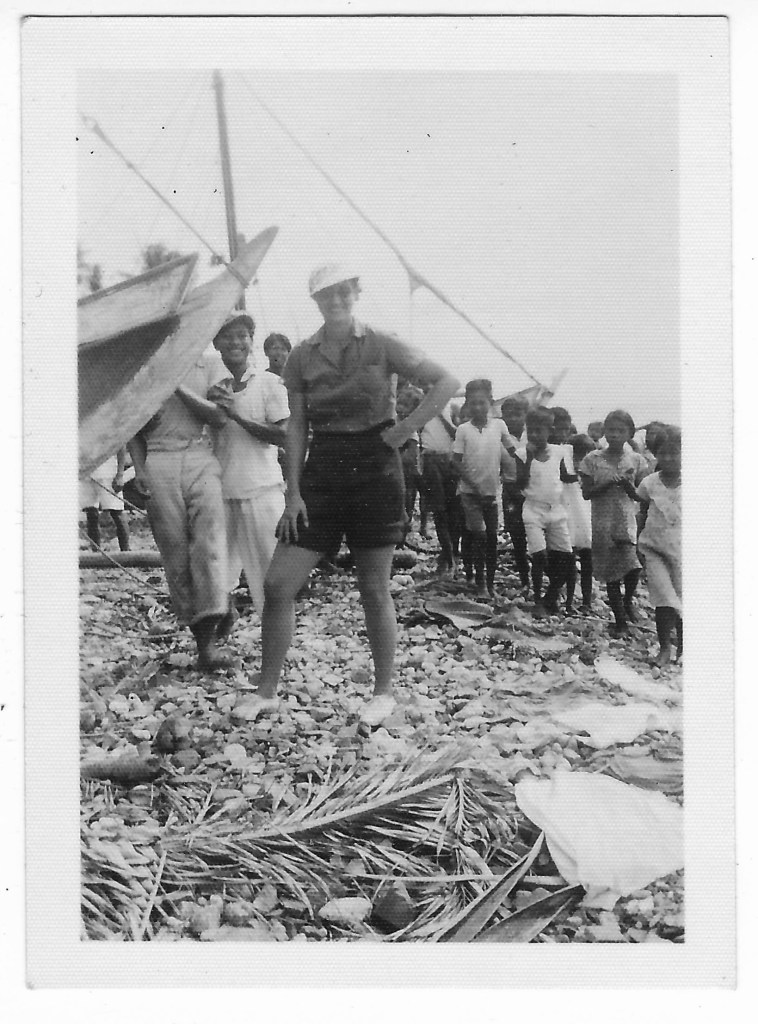
Helen in the Philippines, 1938. I have very similar shoes
Sat. Feb. 26 

Reduced speed last night to time arrival in Opon between boats, for there's only one wharf at the coconut oil refinery. Slid alongside before 8:00 a.m. Coconut oil hose into the deep tanks at once.

Serenaded before breakfast by native boys with ukuleles — who sat and played most of the day. "Milk from contented coconuts, I suppose". Uke's from Y 1 up.

Side note: Is the ‘milk from contented coconuts…’ lyric part of their serenade?? Or a saying of some sort? The Internet is not being helpful.

Shag and I went ashore between raindrops on a picture taking expedition. Opon is a small village (3 towns on the island — Mactan where the Magellan monument stands). 

Bamboo houses, coconut trees very short, got an orange blossom (much sturdier and larger than U.S. ones) from a 7th day Adventist Mission. Pony carts, the train of small boys, "Beautiful Lady in Blue", "Maternity Center and puericulture".

Side note: Opon is now Lapu-Lapu City.

The coconut refinery: take in 250T. copra daily, produces 170T. oil (storage tanks hold 340T.), 500 employees in 3 shifts year around. Buy whole nuts on % oil and water (by chemical tests). Climate here damp, 10% water, not millable. Kept under cover a month until lose 5% of water. Split nut, keep for month, crush twice, 2nd time to powder. Heated, oil pressed out in hydraulic press, refuse pressed into cakes, (removes extraneous matter & color) packed & shipped to Europe, cattle feed. For soap, oil mixed with 1% fuller's earth, 3% F.E. for white oil, shells for fuel. 

Side note: Coconut Refinement 301 (it’s like graduate level).

After lunch Sam, Ruth and I hired us to the town wharf, took an outrigger catamaran with blue sails (25 ft. long, 10 ft. outriggers, sail with 2 booms). Sailed across the bay to Cebu in an hour. Stood on the outrigger and dangled a foot. Grand sail. 

Side note: Dangling a foot off an outrigger catamaran whilst casually sailing off the Philippine’s in 1938 (at least the part before the war started) does sound grand.

To a club for some refreshment, shortly the Silverwillow arrived. First time I've seen her under way when I've not been on board. 

Sauntered around the town, saw the cross Magellan planted, the P.O., Int. Harvester Co., Shamrock Hotel, Colon St., the oldest in the Philippines, endless rows of shops with odds and ends of trash, narrow St's., Spanish architecture, iron grill work.

Rain, but not enough to delay loading much. Copra arrives on truck in bags in slings, dumped into the hold, is removed in port by suction. The whole town smells of it. Breeds flys. Chief says they eat all the oil out of the winches.

Shag and I went walking, found a bollard to sit on and talked for hours. He proposed to me again this morning. Sign on a movie house, "Nothing Sacred" and good added shorts.

Side note: Proposed AGAIN?? She failed to mention the first time. All this news and her handwriting, in her personal journal, remains the same as everything else… all measured.

A robust paragraph about coconut refineries, followed by seven words about a marriage proposal, all the same type height, width, angle, and pen pressure. That and she mentions it calmly, right after a story about smelly winches.

The below isn’t the same text, but it shows the same consistency.
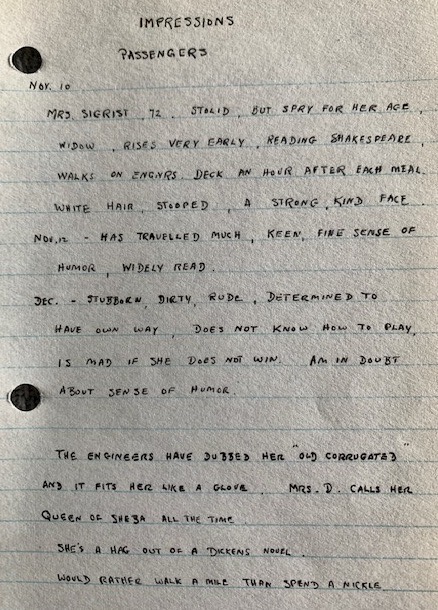
Alas though, we only have context as much as what’s in the journal, so nada about her feeeeelings about being proposed to AGAIN, so we must forge on… (but an element of romance and suspense makes for a Hollywood story, so thank you to Helen for keeping it coy).

Sun. Feb. 27: Walked ashore with Chief at 7 a.m. Very hot and glaring water and copra still loading. Lord Cochran, London, abaft us, has just been to Odessa under sealed orders. No pilot met the boat, "Mr. X" boarded when they landed, took on a cargo of guns, ammunition, planes, to Indo China, with each man receiving a bonus: Capt. $5000, Mate and Chief $4000, etc. thru each member on crew.

Side note: The USSR and China and Mr. X and guns and ammo and payouts?!?! The HMS Cochran (nee HMS Ambrose) was British. Just that year the boat went from being a passenger boat to a destroyer depot ship… one apparently up to shenanigans. Pirates??

Stopped at the race course — 8 a.m. to 6p.m. every Sunday — a dirt track in the stix, bamboo shelter for a grand stand, moth eaten looking ponies. 

Bridge of signs — natives brot out from the walls, dug their graves were shot so their bodies toppled in. The Spanish were full of tricks like that. The cemetery next to the hospital (for convenience, I suppose).

The house on the hill started by an American, blatant and ugly, Y 30,000.

Side note: Each port stop in this story could be a case study in why colonialism is absolutely a beyond monstrous endeavor. Yet almost 100 years later it’s still in the dialog.

Back to the ship at 10:20, and Shag got what for not being on board at 10, tho we didn't sail until after 12 — passed Opon during lunch, tho I went out in time to see the Nordmark from Berlin drawing up for some coconut oil. She's a big freighter, fine looking ship. Last look at tropical islands with sundown for tonight we go thru straits, the last land before Pedro. Toward dinner time we ran into rain and fog... and we crawled thru the night.

Side note: Pedro is San Pedro, California, which will be their next (and last) stop!

Mon. Feb. 28: Hard rain and rough seas. Capt. on the bridge all night, sleeping today. Knit and read. Stopped rain except for showers, but the jack staff wavered up and down all day and into the night. 

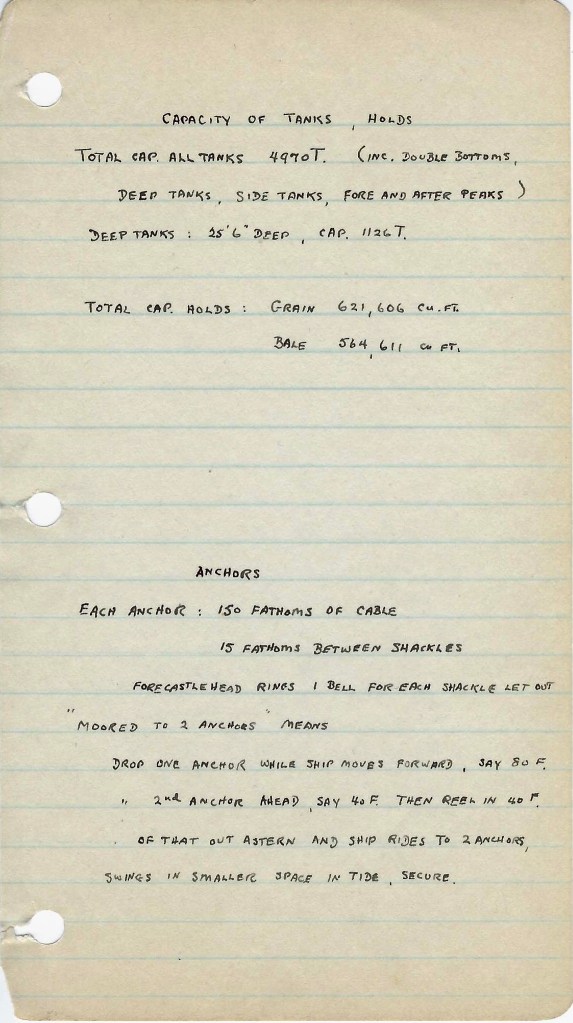
Jim had p.m. off, got some information about Lloyds Registry Pimsoll marks, capacity of various tanks, etc. Discovered a Wodehouse in the library and read some to Shag in the evening. During the hardest rain our canvas protector on passenger deck went up.

Side note: Ah ha! We have discovered the context to the notes and illustrations below. So it was Helen as student (that is her handwriting) and Jim as professor. But then she’s sheltering with Mr. Shag (the repeat proposer of marriage) later, during the hardest of rains.
Onwards!
39. Women in Slacks, Taxi Dancing & Snakeskin Belts, Cebu & Manila, PHILIPpines — Feb 21 – 22, 1938

The After-the-Trip Letter

Sam and I (he was a passenger we acquired in Java) stopped traffic in Cebu, and the citizenry turned out to stare, for he wore shorts and I had on slacks, and such peculiar creatures had not been seen before in those parts.

Side note: In 1938, women’s slacks were popular (and controversial) in a host of places near and far. Maybe they hadn’t made inroads yet in Cebu though… until now! Helen likely knew wearing them out and about in certain places, like the Philippines in 1938, would induce an eyes-out-on-stems effect, as she liked to say, and I think she liked it that way.

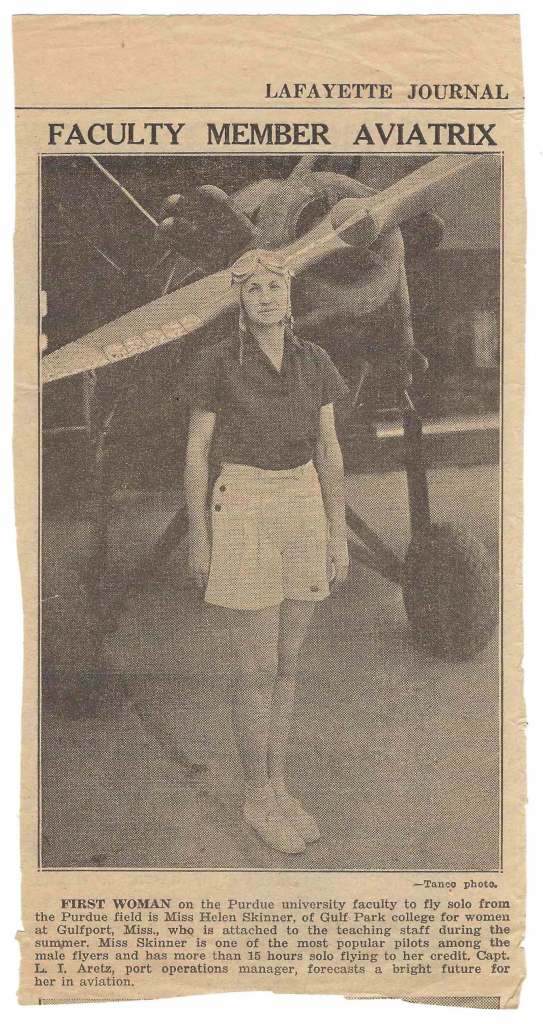
Below are some Helen-in-pants (and shorts) photos from the 1930s; the last one is from this voyage, and perhaps those are the slacks she wore out and about in Cebu.

Since we’re in Cebu, here’s a neat video filmed there in the 1930s that is worth a look see, with its cool old footage of the hustle bustle streets. My notes about it: hemp looks very nicely silky and blonde even in black and white; Cebu was the first European settlement in the region; the Philippines is named after King Phillip II (PHILIPpines), who was a king of Spain. Who knew??

“Sam and I … stopped traffic in Cebu, and the citizenry turned out to stare, for he wore shorts and I had on slacks, and such peculiar creatures had not been seen before in those parts.”

Day-to-Day Journal

Side note: In the day-to-day world, we’ve now left Cebu and are anchoring outside Manila.

Anchor outside the breakwater. Italian ship "Victoria", U.S. Army Transport waiting to go in. Our berth almost last one out. Passengers ashore at 10:30 on a Stevedore's launch. 

To Am. Express, Kodak store, P.O. Met for lunch at "Astoria" on Escolta. Air conditioned, rare roast beef, green beans properly cooked, real strawberry sherbet.

Side note: The Italian Victoria (aka “The White Arrow”, “The Dove of the Orient”, “The Ship of Maharajahs”) was a posh ocean liner famous for its interiors (there are some pictures in that link and they’re regal indeed). Like the M.S. Silverwillow (the ship Helen was on), The Victoria was sadly destroyed during World War II.

Took a car (Y 3. per hour) to Yneko market, lost our minds over fiber matting, bags, etc. 

Thru the poorest part of town, destroyed a few years ago by fire. People living in shanties of rusty tin.

Thru the walled city, then past the big hotels and clubs. Polo grounds to Rizal, another native village. Huts on stilts, has been known to rain 60 in. in one week. To an ancient church to see the bamboo. Return on Stevedores' launch at 5:00.

Shag and I to town at 8:00, sat in the Manila hotel and watched the world go by. At 9:00 taxi'd to Santa-Ana; the World's largest dance hall. One section roped off for women with escorts; the rest, the size of several city blocks, for Taxi-Dancing with natives. Some very lovely girls, all neatly dressed. First time I have danced with Shag.

Side note: I’ve just learned what Taxi Dancing is (men paying to dance with women) and why it’s called that (woman gracefully ‘taxi’ the men around the dance floor, with each song costing a fare).

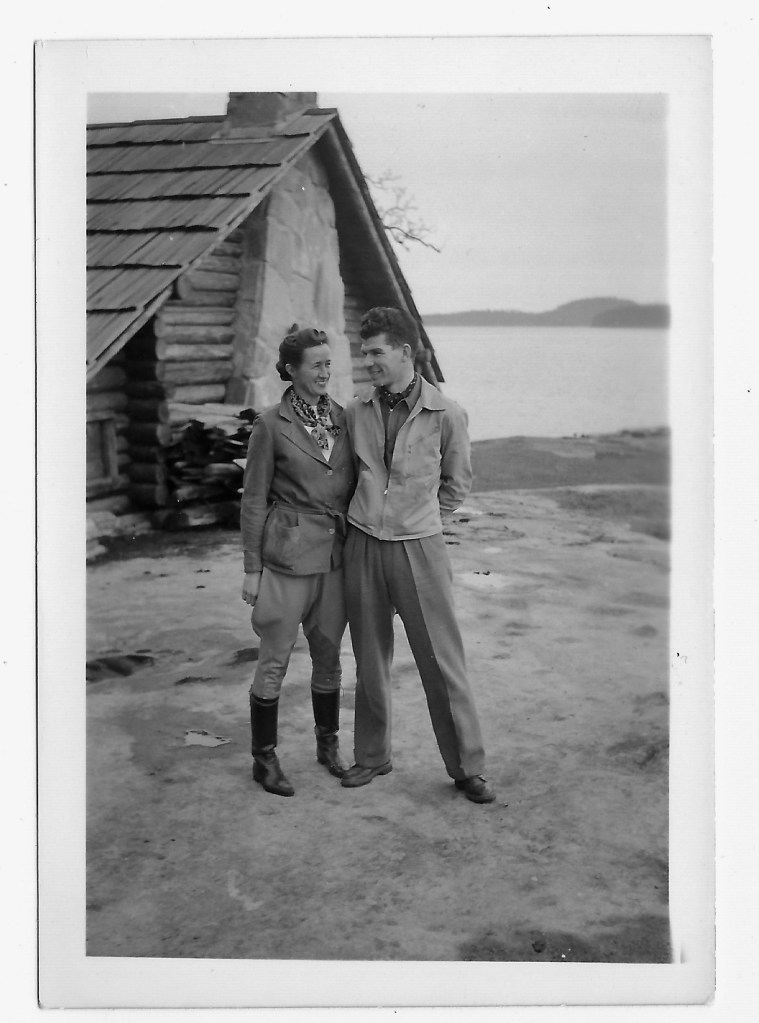
The Santa Ana club must have tawdry stories to tell. But also some charming stories, perhaps like the first dance between a dashing young ship engineer / race-car driver and a fast-talking professor, pilot, and consummate flirt, after months of heavy innuendo (from both sides) throughout their courtship at sea.

Here is them:

Roy (Shag) and Helen Shadbolt, likely near Vancouver, Canada, in the 1940s
To Legaspi pier at 2:00 a.m., had delicious apple pie al la mode. Came back in our private launch (Y 1.30). En route back to the boat this p.m. it began to rain torrents, were drenched going up the gangway. 

Went thru the Alhambra Cigar factory. Cigars and cigarettes — long ones with brown paper covers as well as white one and regular size. The cutting in lengths particularly interesting, so quick you can't see the cutting edge. Girls pack them in containers, tell the number by touch alone.

Side note: Sadly, the workers probably were ‘girls’, as they were often children. Here’s a picture from 1930.

Tue. Feb. 22: 

Washington's birthday a holiday here, all "white" stores closed. Stood around on one foot and another waiting for someone to decide what flag to put up to summon a launch. Sooner or later the mate suggested a "J", finally a boat appears.

Side note: The Philippines was at the time an American colony, hence Washington. And how very colonial to celebrate the former president of the colonist nation, while in the colony, but then only let the colonizers partake.

Shag and female passengers to the Walled City. I bought a Panama hat, asked (Y 5), pd. (Y 4), ($2.) for a white straw summer hat! Bot snakeskin belt, sandals, bill folds, a kimono for Pop, and quite unintentionally, one for myself, a double black and white one. Spent some time prowling around. Back to the ship to go on 4 p.m. watch.

Side note: Shag and female passengers to the Walled City means that 23 year-old boat engineer Shag somehow got tasked with escorting six women — five of them in their senior years — on a field trip. We like Shag for this.

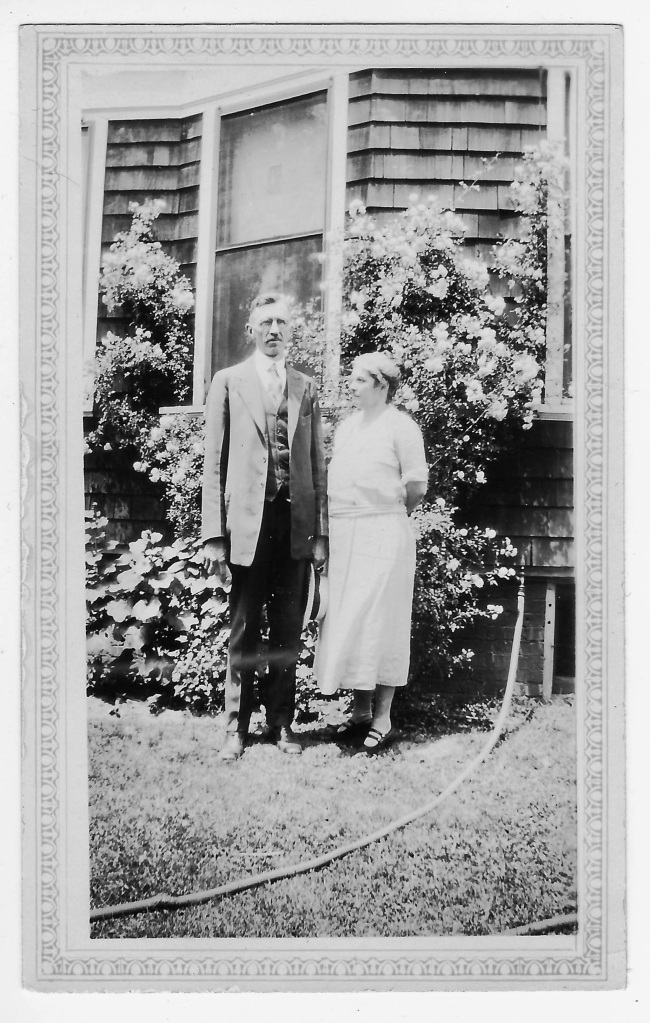
I cannot picture Helen’s father in a kimono. But then Helen tends to look serious in pictures and she is a goofball so who can tell.

Helen’s parents (my maternal great grandparents). Helen’s father is hard to picture in a kimono, huh?
Just before dinner my new wisdom tooth began aching in a big way — ate no dinner. Capt. asked me to go to town. I declined, thot I'd be no help to anybody. Tried numerous remedies, final relief with an aspirin — slept like the drugged.

Side note: We will let Helen sleep a bit before the next post, which I must say is quite exciting… like it features contraband, Mr. X, and a big ole question.

38. Magellan & Stilt Houses — The Philippines, Feb 19 – 20, 1938

After-the-Trip Letter

Shall I say we "browsed" through the Philippines, loading sugar, palm and coconut oil, copra and copra meal at several of the islands. 

We saw the spot where Magellan was buried, or where what was left of him was buried after the cannibals finished with him...we thumbed rides on native outrigger sailboats, went fishing, went ashore in native villages...

Side note: Magellan died by poison arrow, in Lapulapu, Philippines in 1521, at the age of 41ish. I’ve just learned (or maybe relearned) that ‘The Magellan Expedition’ was indeed the first expedition to circumnavigate the globe, but Magellan himself did not complete the voyage, because of the arrow.

...the bamboo huts are raised high on stilts..that helps to keep out some of the “varmints", and then it rains so much they would be awash most of the time. Normally the space under the house provides shelter for the pigs and chickens. The floors of the hut are made of split bamboo, rounded side up, and they seem to sleep comfortably on woven bamboo mats spread on the floor. A bed is such a novelty...there isn't much furniture of any kind, but I located the inevitable Singer Sewing machine. 

Side note: A whole paragraph about stilt houses is a lot for a three page letter about a five month trip. I bet the houses were (and are) striking for just about anyone used to seeing houses on the ground. They likely looked like this and the bamboo mats like this.

The Day-to-Day Journal

Lighters came from Victoria Refinery across the bay. Catamarans came swooping down on us from all directions. Unbelievably narrow craft of various sizes with sloop rig and great bamboo outriggers. 

At 1:00pm the starboard forward life-boat went overside and sailed across to the village. We were met on shore by the population, followed about, a few spoke some English.

Perhaps 60 bamboo huts on stilts, pigs underneath, almost no furniture, occasional magazine pictures on the walls, a few potted plants, one sewing machine.

Some of the girls quite nicely dressed. The boys swam, Jim and I wandered up "Main Street". Passed the "Bay-Ang Barrio School", kept very neatly. Water buffalo sloshing about in the puddle in back of the town.

Side note: The link above shows a very different style of stilt house than the first one I shared. The quality would depend on who you were, but whomever, you’d be on stilts.

Sun. Feb. 20: Off for Manila soon after. Sam is going to do violence to Daisy in the cause of "I have a friend". Two people have a basic understanding for marriage. 

Side note: Miss Daisy Mount is one of the civilian passengers about whom Helen said early into the trip:
“Sweet little old lady, dainty, birdlike movements….”.

And then Daisy said to Helen, “I have a friend”. So maybe that was Daisy’s thing… to make friends; and now Sam is getting the treatment. A rugged sailor hitching what he thought would be an easy a ride on a freight boat for a few stops through Philippines, and a sweet dainty little old lady who wants to be his friend. I hope we hear more.

But before we move on to Manila, let’s look at Helen in the Philippines for second:

Helen Skinner, Philipines, 1938