
The Dutch East Indies was (and now Indonesia is) made up of 17,000 islands, I’ve learned. The Dutch had been taking up space on them since 1600. Their time was almost up though, not that the local population would benefit, as they were next occupied and indentured by the Japanese. After World War II, an independent Indonesia was born, free of colonizers and occupiers.
In February 1938, while countries in every direction fortified their armies, Helen slipped into her boat deck hammock and cracked opened War and Peace.
Day-to-Day Journal
Thru. Feb. 10: Tegal

Anchor at 5:30 a.m. — everything very damp. Wrote all a.m. Hot and muggy, no one went ashore — usual round of visits on boat deck. Started Tolstoy's "War and Peace".
Side note: What a book to be reading as war is percolating. I mentioned the Napoleonic Wars in the last post, since they were the reason the Dutch East Indies briefly had an English governor.
So Napoleon is the ‘War’ in War and Peace, but though I minored in (Russian) literature, I never read the book, and I don’t know what the ‘Peace’ is. My husband read it last year (I harbor both jealousy and pride for this feat) so I could ask him, but will instead suss that ‘Peace’ is the class of those mostly unaffected by (at least the combat and blood of) ‘War’.
Anyhow, Helen’s gonna be reading A LOT about the Napoleonic wars.
Semarang’s volcano purplish against a graying sky, at sunrise beautiful cloud masses with just the suggestion of light shining thru
It was decided we'd drive to the Borobudur, but the agent changed our minds. Said in the West monsoon it is liable to be very rough in the afternoon and we'd have to be prepared to go on to Sourabaya by train.

Sigrist frothed at the mouth, but wouldn't risk the expense, so we went in to Semarang on the Agent's launch. The driver took us up on the hills into the residential section, charming homes, grand view out over palm, banana, acacia, flamboyant trees to the ocean.
Side note: This frothy Sigrist, mad because of a monsoon, is a 72-year-old widow whom Helen liked at first, but now does not, and she’s probably only currently traveling with her because of limited options.
I’ve mentioned that we do not learn much about the other few civilian passengers on the freight boat (eight total I believe) because Helen is focused on the ship and its men. But she does give her impression of the passengers for the first few weeks of the trip. Here are Helen’s journal notes about Sigrist:
Nov. 10 - Stolid, but spry for her age, widow, rises very early, reading Shakespeare, walks on Engnrs. deck an hour after each meal. White hair, stooped, a strong, kind face.

Nov. 12 - has traveled much, keen, fine sense of humor, widely read.

Dec. - stubborn, dirty, rude, determined to have own way, does not know how to play, is mad if she does not win. Am in doubt about sense of humor. The engineers have dubbed her "Old Corrugated" and it fits her like a glove. Mrs. D. calls her Queen of Sheba all the time. She's a hag out of a Dickens novel. Would rather walk a mile than spend a nickel.
Side note: The December note doesn’t even get a date. Sigrist is just a plain old pain by then. Moral: rudeness trumps your good qualities so don’t be a Karen.
Stop at a Batik factory — under a shed a man drawing designs on white cloth in pencil, freehand, two women squatting waxing the intricate patterns with a tiny brush. Bot 2 pieces of hand block work @ f2. each.

Read all afternoon. At 5 to listen to Shag's radio and again in the evening (it rained cats and dogs), best music in months.

I wanted to dance and Shag was inspired to draw a charcoal stage setting for it.
Side note: When I search about radios on boats in 1938, most of the hits are about War of the Worlds and how Orson Wells would scare the bejeezus out of people later that year.
But Helen and Shag would have been listening to offshore radio and I bet it sounded something like this, but all staticky. I don’t know if young men commonly learned to dance in 1938, but even if they did, I bet Helen was leading. She taught dance as a P.E. instructor, as it was part of physical education for women then. She also notes in her timeline that she attended dance seminars and conferences over the years. And dance doubled as a flirting mechanism and tripled as a way to judge men.
But back to the boat, the dance, Shag, and charcoal drawn-stage… ballroom dances were Helen’s favorite. Those tend to take up quite a bit of room, but I’m quite sure they made due, dramatically dipping in front of the chalky stage outline. Let’s remember how cute they were.

Thot I was back in Calcutta when I came along the starboard alleyway. Packed like sardines with sleeping figures — the stevedores stay on board here until the job is finished. They were sleeping on bamboo mats on the iron deck with rain pouring in on them.
Side note: We are back in the real world now, witnessing more of the ravages of colonialism.
Sat. Feb. 12: Capt. and the male passenger went ashore today, while the rest of us stayed aboard and I for one enjoyed just sitting on a beautiful green sea, reading, writing. Sat in Capt.'s new chair all a.m. The hammock was most comfortable in the p.m.

Jim had cut off a pair of white ducks that had worn out at the knees, I did a little hemming and there are now shorts.
Side note: White Ducks still are around. They were and sometimes still are very wide leg dungarees that sailors/navy men wear and imagining them as shorts is fun.
SOERABAJA - MALANG

Sun. Feb. 13: Pilot came on at 5:20 a.m. and we were alongside by 7:30.

On to Malang — 95 km. Distant volcanoes and mountains all around us — a resort town, Tretes, on the volcano on our right.

Here the rice fields are in every stage, much of it like seas of green grass, some of it headed and ripe.

Passed some carts carrying rice shocks. Teak trees blooming, creamy white plums. Miles of sugar cane, several sugar factories (work 8 mo. in the year). Kapok factories, and many coolies carrying big baskets of kapok pods.

Numerous Durian markets, the fruit tied in banana leaves, baskets of tapioca root and several tapioca factories. An unfamiliar plant growing like tapioca which the driver said was used for color for Batik.

Off the main road to look at two stone Buddha's and a Hindu monument. Saw ducus, pomelo, oranges, papaya growing, mango trees, first I've seen to recognize them since Burma — much smaller than African tree.
Side note: She keeps mentioning durians but does not mention the smell. All I know about durian is that they smell and are banned from Singapore markets (or were in 2015).
To a park in the heat of the day to feed the monkeys and strikes me as being too too ridiculous — were almost overwhelmed by a dozen girls with bananas and peanuts to sell who climbed all over the car and shouted for us to buy.

Into Malang, quite high and very new and modern, a beautiful town. Resort for people from the coast, soccer, hockey fields, tennis courts, race track.
Side note: Malang was popular among the Dutch and other Europeans so made to be all swanky.
To Palace Hotel — Dutch, tile scenes of Jaye around the dining room. Had my first ricetafel, a typical Dutch dish of the country: a soup plate of rice, followed by seventeen dishes (some places use 17 waiters), some go on a side plate but most go on the rice, then stirred up in it. Prawns, fried chicken, bamboo shoots, bean sprouts, onion, fish. All of it very hot, topped by a poached egg - delicious. For dessert avocado pear mashed with coffee extract poured over it. Must have some more one day. Coffee in the lounge — coffee extract, hot milk. During the drive back it poured a deluge — got quite wet.
Side note: The Palace Hotel is still around and looks very fancy.
In Soerabaja to a Batik shop, but found nothing I especially wanted. To a wood carving, silver, etc., store, bot nothing. Saw several things I'd like if I had money and a home. Return to ship at 5:30. Shag and I found a grassy bank in the moonlight on the canal. Saw strange boats with queer sails.
Side note: Helen is right that she doesn’t have a ‘home’ home, as she likely lives in teacher housing during the school year, and at various summer camps, where she also teaches P.E., during warm climes.
Her timeline doesn’t have an address for her between when she first goes to college 1919 and 1938 (that’s foreshadowing…) and she fully appears to have wanted it that way. She was scouting for jobs on this trip after all, which woulda meant a lot more temporary housing.
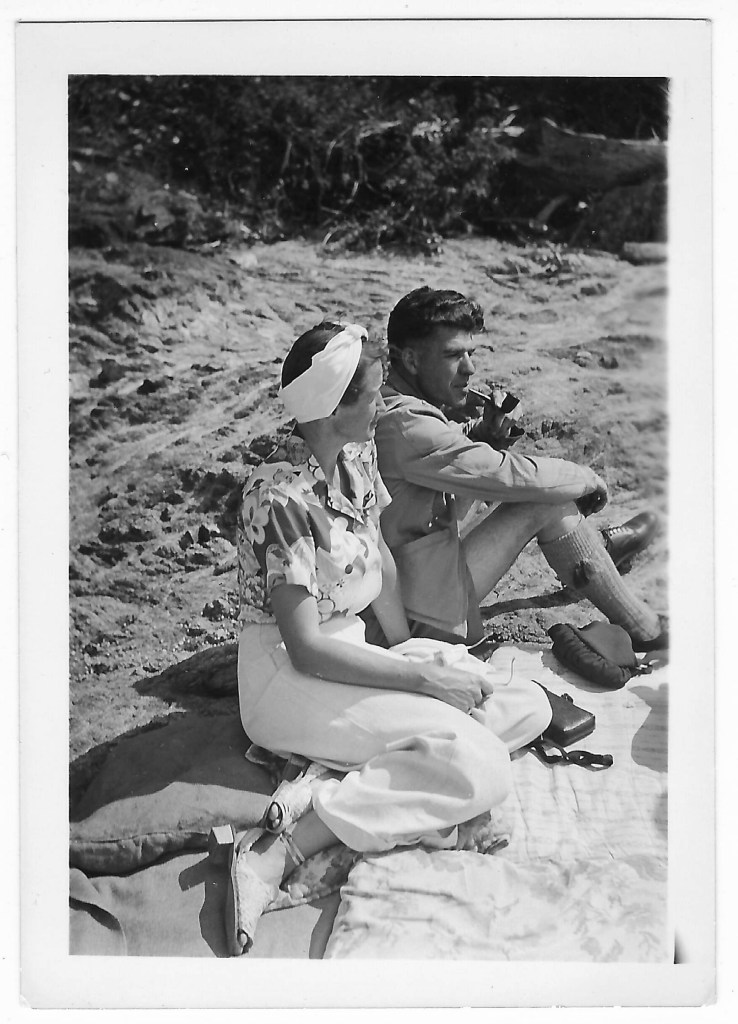
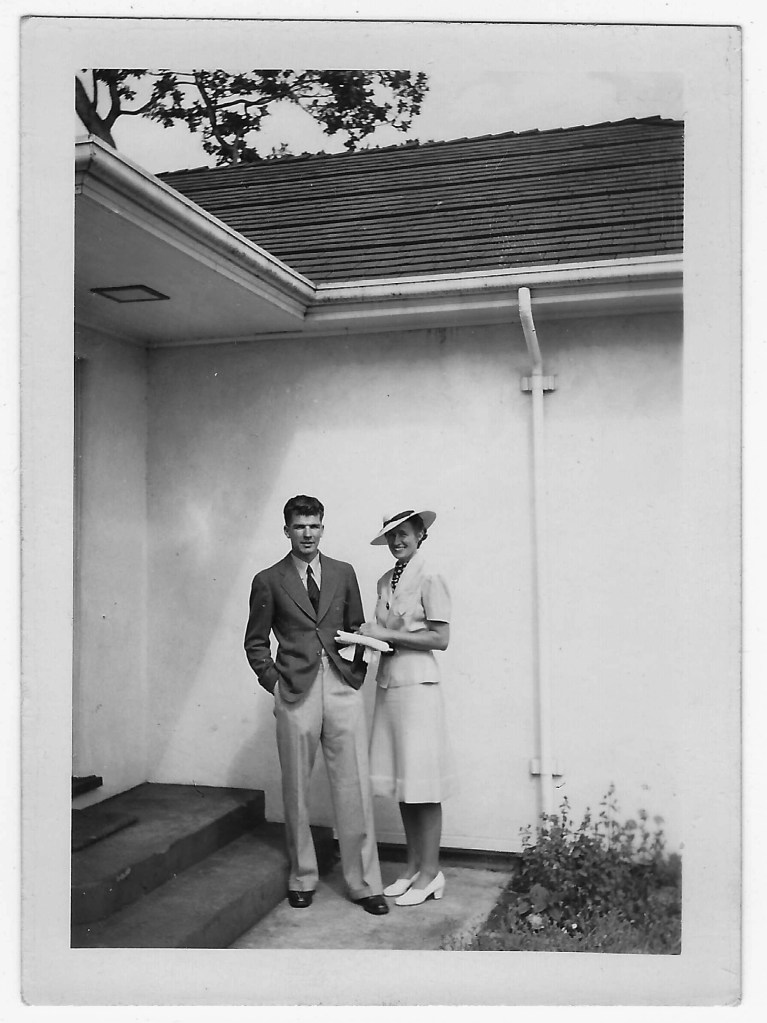
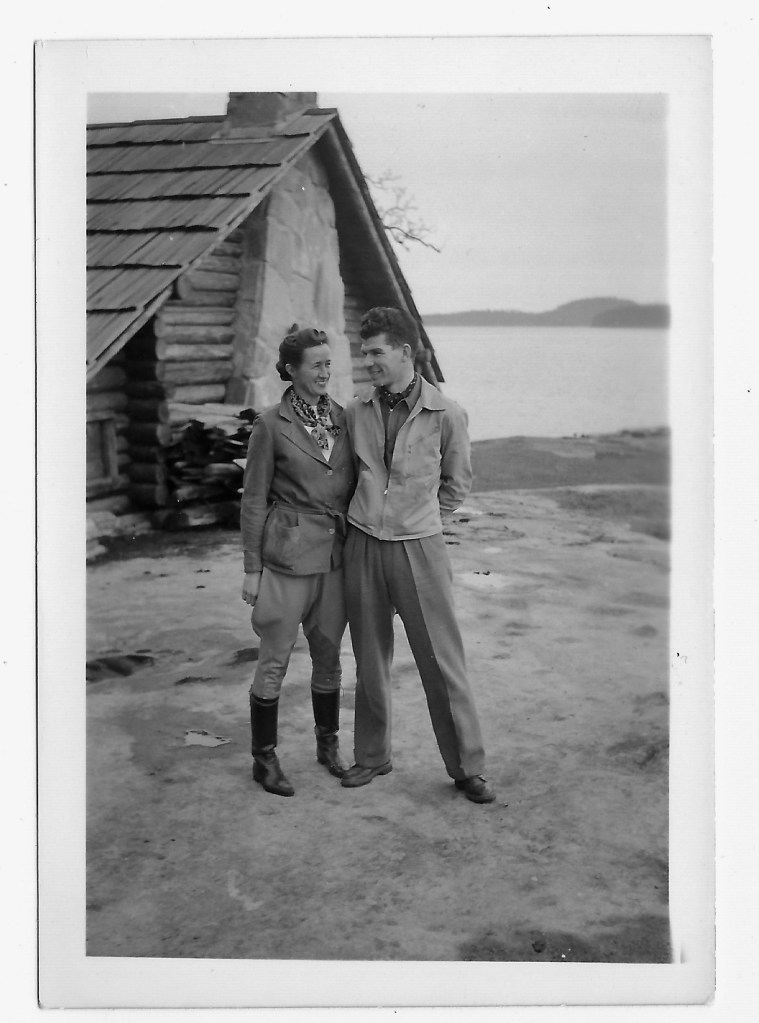
Helen would get a home soon though (I kept you in suspense after that foreshadowing!), one where she’d have a place for all her travel trinkets, and someone to admire them with.
Is that someone with her now ‘…in the moonlight on the canal’ on the grassy knoll? Read on to find out!
 Flying Under the Radar