39. Women in Slacks, Taxi Dancing & Snakeskin Belts, Cebu & Manila, PHILIPpines — Feb 21 – 22, 1938

The After-the-Trip Letter

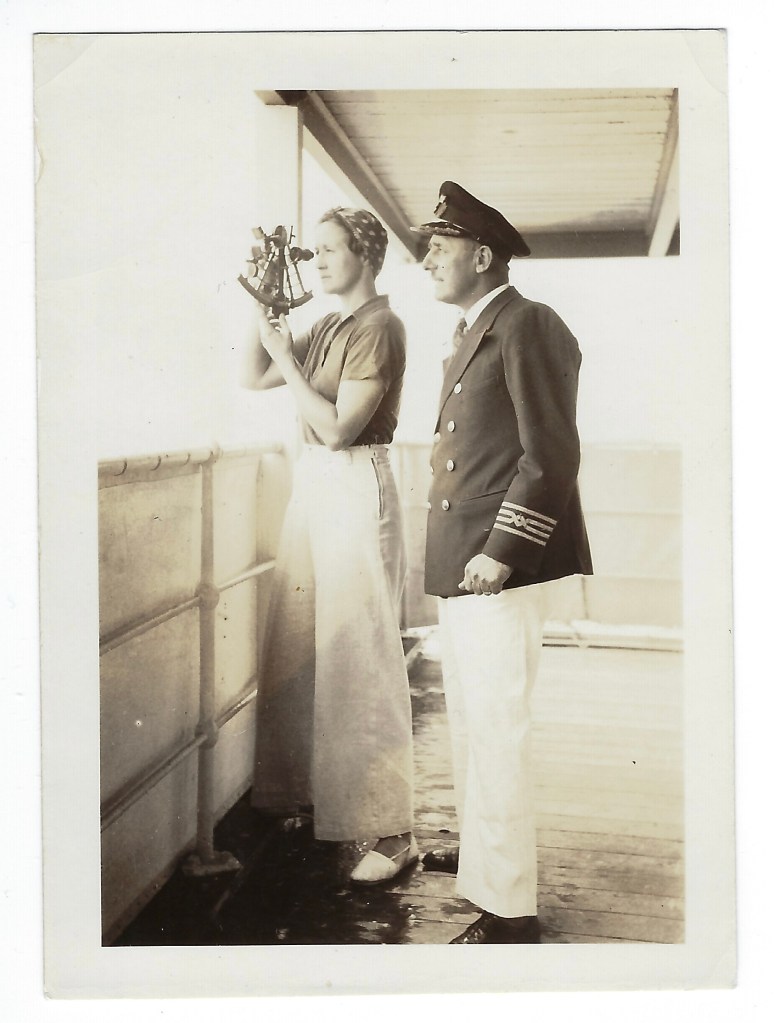
Sam and I (he was a passenger we acquired in Java) stopped traffic in Cebu, and the citizenry turned out to stare, for he wore shorts and I had on slacks, and such peculiar creatures had not been seen before in those parts.

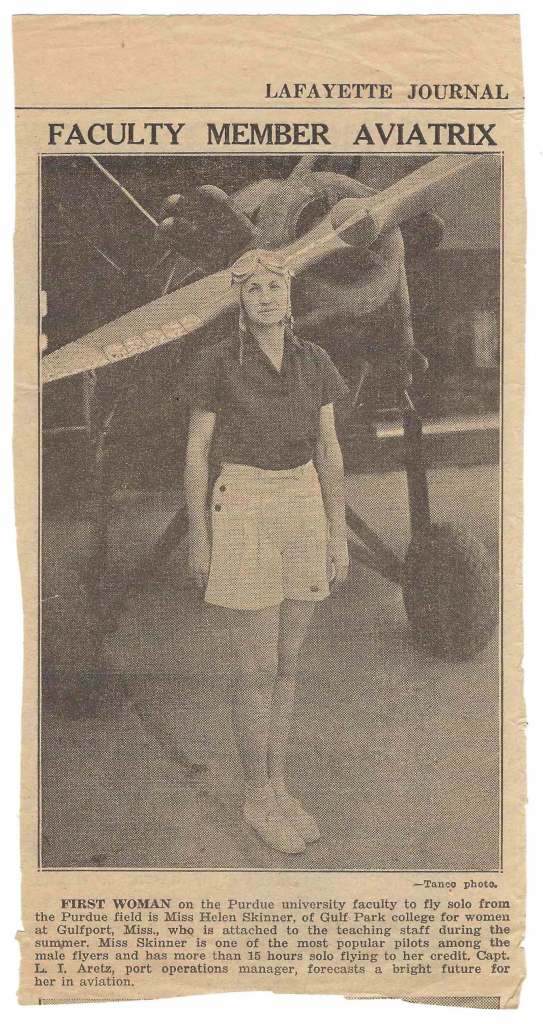
Side note: In 1938, women’s slacks were popular (and controversial) in a host of places near and far. Maybe they hadn’t made inroads yet in Cebu though… until now! Helen likely knew wearing them out and about in certain places, like the Philippines in 1938, would induce an eyes-out-on-stems effect, as she liked to say, and I think she liked it that way.

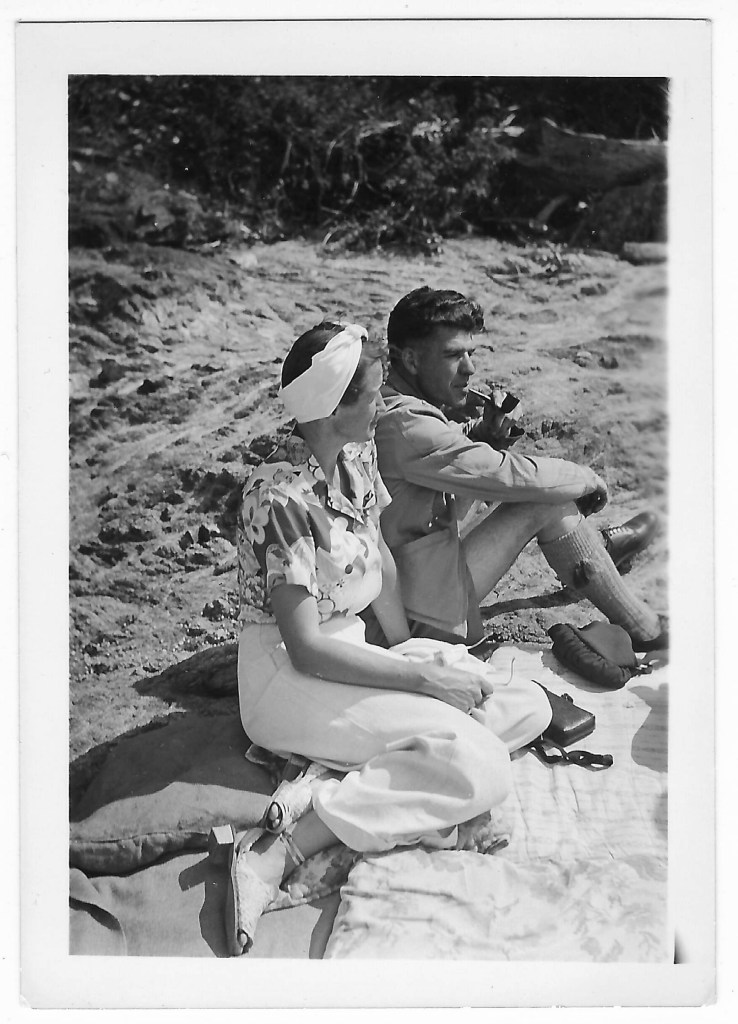
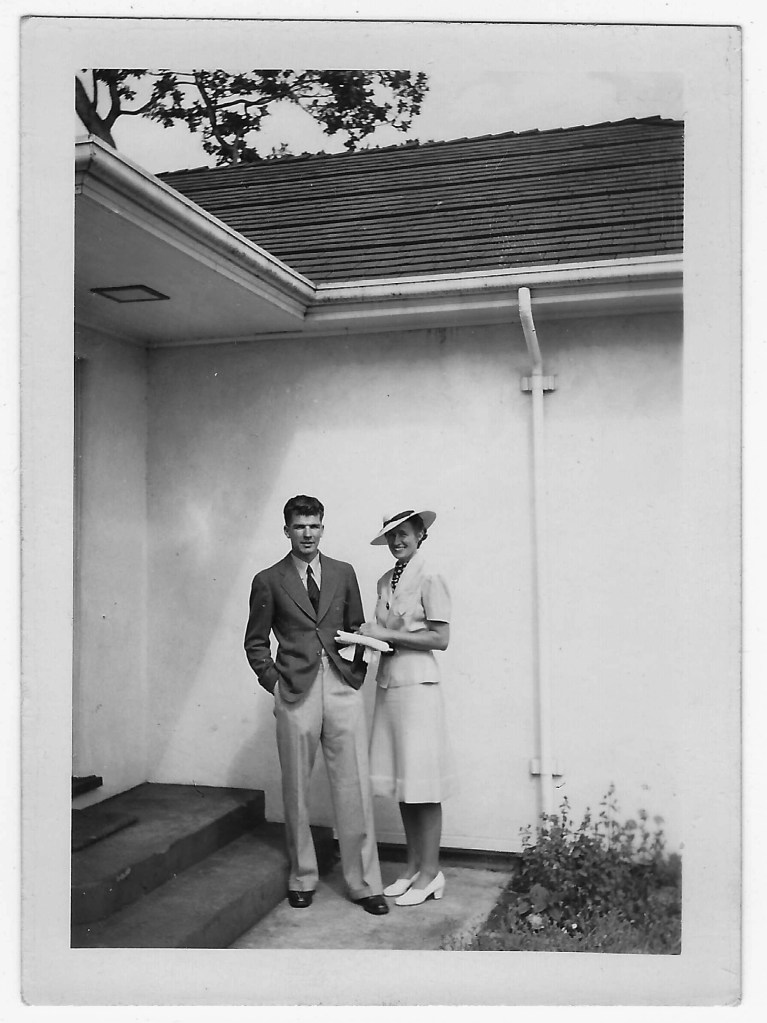
Below are some Helen-in-pants (and shorts) photos from the 1930s; the last one is from this voyage, and perhaps those are the slacks she wore out and about in Cebu.
Since we’re in Cebu, here’s a neat video filmed there in the 1930s that is worth a look see, with its cool old footage of the hustle bustle streets. My notes about it: hemp looks very nicely silky and blonde even in black and white; Cebu was the first European settlement in the region; the Philippines is named after King Phillip II (PHILIPpines), who was a king of Spain. Who knew??

“Sam and I … stopped traffic in Cebu, and the citizenry turned out to stare, for he wore shorts and I had on slacks, and such peculiar creatures had not been seen before in those parts.”

Day-to-Day Journal

Side note: In the day-to-day world, we’ve now left Cebu and are anchoring outside Manila.

Anchor outside the breakwater. Italian ship "Victoria", U.S. Army Transport waiting to go in. Our berth almost last one out. Passengers ashore at 10:30 on a Stevedore's launch. 

To Am. Express, Kodak store, P.O. Met for lunch at "Astoria" on Escolta. Air conditioned, rare roast beef, green beans properly cooked, real strawberry sherbet.

Side note: The Italian Victoria (aka “The White Arrow”, “The Dove of the Orient”, “The Ship of Maharajahs”) was a posh ocean liner famous for its interiors (there are some pictures in that link and they’re regal indeed). Like the M.S. Silverwillow (the ship Helen was on), The Victoria was sadly destroyed during World War II.

Took a car (Y 3. per hour) to Yneko market, lost our minds over fiber matting, bags, etc. 

Thru the poorest part of town, destroyed a few years ago by fire. People living in shanties of rusty tin.

Thru the walled city, then past the big hotels and clubs. Polo grounds to Rizal, another native village. Huts on stilts, has been known to rain 60 in. in one week. To an ancient church to see the bamboo. Return on Stevedores' launch at 5:00.

Shag and I to town at 8:00, sat in the Manila hotel and watched the world go by. At 9:00 taxi'd to Santa-Ana; the World's largest dance hall. One section roped off for women with escorts; the rest, the size of several city blocks, for Taxi-Dancing with natives. Some very lovely girls, all neatly dressed. First time I have danced with Shag.

Side note: I’ve just learned what Taxi Dancing is (men paying to dance with women) and why it’s called that (woman gracefully ‘taxi’ the men around the dance floor, with each song costing a fare).

The Santa Ana club must have tawdry stories to tell. But also some charming stories, perhaps like the first dance between a dashing young ship engineer / race-car driver and a fast-talking professor, pilot, and consummate flirt, after months of heavy innuendo (from both sides) throughout their courtship at sea.

Here is them:
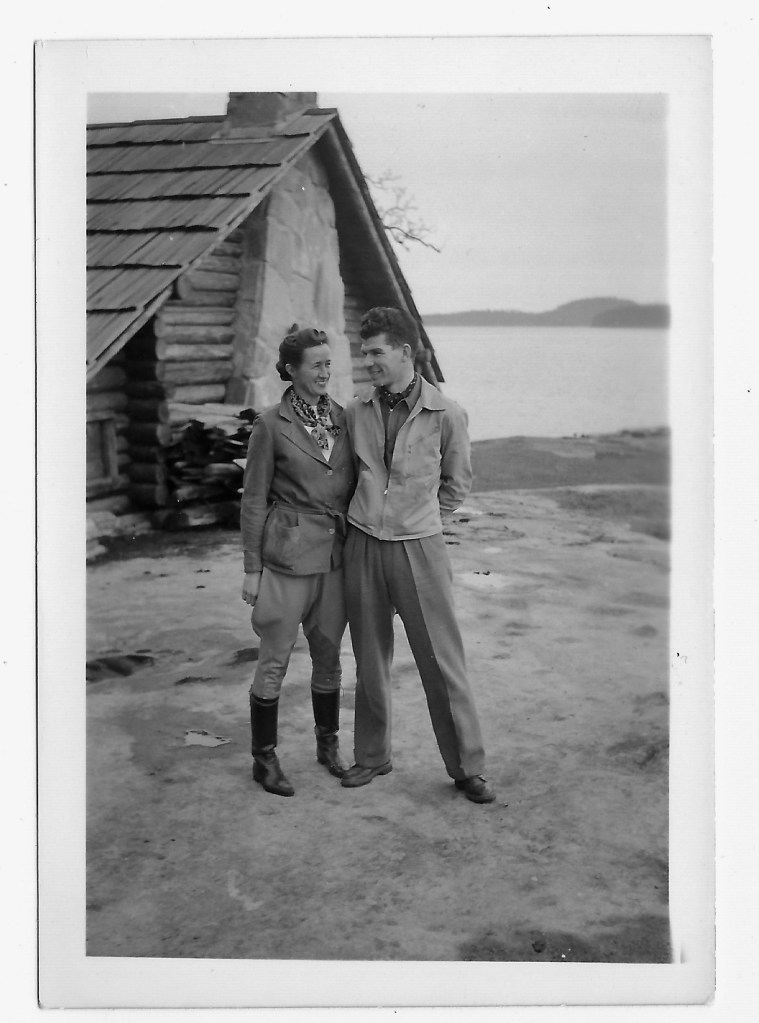
Roy (Shag) and Helen Shadbolt, likely near Vancouver, Canada, in the 1940s
To Legaspi pier at 2:00 a.m., had delicious apple pie al la mode. Came back in our private launch (Y 1.30). En route back to the boat this p.m. it began to rain torrents, were drenched going up the gangway. 

Went thru the Alhambra Cigar factory. Cigars and cigarettes — long ones with brown paper covers as well as white one and regular size. The cutting in lengths particularly interesting, so quick you can't see the cutting edge. Girls pack them in containers, tell the number by touch alone.

Side note: Sadly, the workers probably were ‘girls’, as they were often children. Here’s a picture from 1930.

Tue. Feb. 22: 

Washington's birthday a holiday here, all "white" stores closed. Stood around on one foot and another waiting for someone to decide what flag to put up to summon a launch. Sooner or later the mate suggested a "J", finally a boat appears.

Side note: The Philippines was at the time an American colony, hence Washington. And how very colonial to celebrate the former president of the colonist nation, while in the colony, but then only let the colonizers partake.

Shag and female passengers to the Walled City. I bought a Panama hat, asked (Y 5), pd. (Y 4), ($2.) for a white straw summer hat! Bot snakeskin belt, sandals, bill folds, a kimono for Pop, and quite unintentionally, one for myself, a double black and white one. Spent some time prowling around. Back to the ship to go on 4 p.m. watch.

Side note: Shag and female passengers to the Walled City means that 23 year-old boat engineer Shag somehow got tasked with escorting six women — five of them in their senior years — on a field trip. We like Shag for this.

I cannot picture Helen’s father in a kimono. But then Helen tends to look serious in pictures and she is a goofball so who can tell.
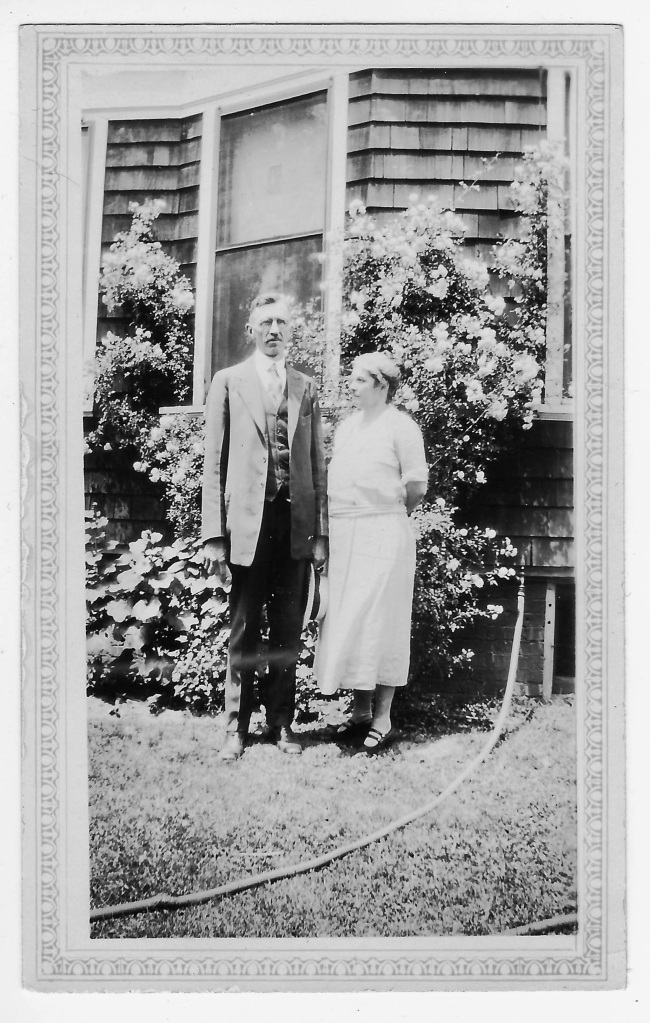
Helen’s parents (my maternal great grandparents). Helen’s father is hard to picture in a kimono, huh?
Just before dinner my new wisdom tooth began aching in a big way — ate no dinner. Capt. asked me to go to town. I declined, thot I'd be no help to anybody. Tried numerous remedies, final relief with an aspirin — slept like the drugged.

Side note: We will let Helen sleep a bit before the next post, which I must say is quite exciting… like it features contraband, Mr. X, and a big ole question.
36. War (and Peace), Dutch East Indies, 1938

The Dutch East Indies was (and now Indonesia is) made up of 17,000 islands, I’ve learned. The Dutch had been taking up space on them since 1600. Their time was almost up though, not that the local population would benefit, as they were next occupied and indentured by the Japanese. After World War II, an independent Indonesia was born, free of colonizers and occupiers.

In February 1938, while countries in every direction fortified their armies, Helen slipped into her boat deck hammock and cracked opened War and Peace.

Day-to-Day Journal

Thru. Feb. 10: Tegal 

Anchor at 5:30 a.m. — everything very damp. Wrote all a.m. Hot and muggy, no one went ashore — usual round of visits on boat deck. Started Tolstoy's "War and Peace".

Side note: What a book to be reading as war is percolating. I mentioned the Napoleonic Wars in the last post, since they were the reason the Dutch East Indies briefly had an English governor.

So Napoleon is the ‘War’ in War and Peace, but though I minored in (Russian) literature, I never read the book, and I don’t know what the ‘Peace’ is. My husband read it last year (I harbor both jealousy and pride for this feat) so I could ask him, but will instead suss that ‘Peace’ is the class of those mostly unaffected by (at least the combat and blood of) ‘War’.

Anyhow, Helen’s gonna be reading A LOT about the Napoleonic wars.

Semarang’s volcano purplish against a graying sky, at sunrise beautiful cloud masses with just the suggestion of light shining thru

It was decided we'd drive to the Borobudur, but the agent changed our minds. Said in the West monsoon it is liable to be very rough in the afternoon and we'd have to be prepared to go on to Sourabaya by train. 

Sigrist frothed at the mouth, but wouldn't risk the expense, so we went in to Semarang on the Agent's launch. The driver took us up on the hills into the residential section, charming homes, grand view out over palm, banana, acacia, flamboyant trees to the ocean.

Side note: This frothy Sigrist, mad because of a monsoon, is a 72-year-old widow whom Helen liked at first, but now does not, and she’s probably only currently traveling with her because of limited options.

I’ve mentioned that we do not learn much about the other few civilian passengers on the freight boat (eight total I believe) because Helen is focused on the ship and its men. But she does give her impression of the passengers for the first few weeks of the trip. Here are Helen’s journal notes about Sigrist:

Nov. 10 - Stolid, but spry for her age, widow, rises very early, reading Shakespeare, walks on Engnrs. deck an hour after each meal. White hair, stooped, a strong, kind face. 

Nov. 12 - has traveled much, keen, fine sense of humor, widely read.

Dec. - stubborn, dirty, rude, determined to have own way, does not know how to play, is mad if she does not win. Am in doubt about sense of humor. The engineers have dubbed her "Old Corrugated" and it fits her like a glove. Mrs. D. calls her Queen of Sheba all the time. She's a hag out of a Dickens novel. Would rather walk a mile than spend a nickel.

Side note: The December note doesn’t even get a date. Sigrist is just a plain old pain by then. Moral: rudeness trumps your good qualities so don’t be a Karen.

Stop at a Batik factory — under a shed a man drawing designs on white cloth in pencil, freehand, two women squatting waxing the intricate patterns with a tiny brush. Bot 2 pieces of hand block work @ f2. each. 

Read all afternoon. At 5 to listen to Shag's radio and again in the evening (it rained cats and dogs), best music in months. 

I wanted to dance and Shag was inspired to draw a charcoal stage setting for it. 

Side note: When I search about radios on boats in 1938, most of the hits are about War of the Worlds and how Orson Wells would scare the bejeezus out of people later that year.

But Helen and Shag would have been listening to offshore radio and I bet it sounded something like this, but all staticky. I don’t know if young men commonly learned to dance in 1938, but even if they did, I bet Helen was leading. She taught dance as a P.E. instructor, as it was part of physical education for women then. She also notes in her timeline that she attended dance seminars and conferences over the years. And dance doubled as a flirting mechanism and tripled as a way to judge men.

But back to the boat, the dance, Shag, and charcoal drawn-stage… ballroom dances were Helen’s favorite. Those tend to take up quite a bit of room, but I’m quite sure they made due, dramatically dipping in front of the chalky stage outline. Let’s remember how cute they were.

Thot I was back in Calcutta when I came along the starboard alleyway. Packed like sardines with sleeping figures — the stevedores stay on board here until the job is finished. They were sleeping on bamboo mats on the iron deck with rain pouring in on them.

Side note: We are back in the real world now, witnessing more of the ravages of colonialism.

Sat. Feb. 12: Capt. and the male passenger went ashore today, while the rest of us stayed aboard and I for one enjoyed just sitting on a beautiful green sea, reading, writing. Sat in Capt.'s new chair all a.m. The hammock was most comfortable in the p.m. 

Jim had cut off a pair of white ducks that had worn out at the knees, I did a little hemming and there are now shorts.

Side note: White Ducks still are around. They were and sometimes still are very wide leg dungarees that sailors/navy men wear and imagining them as shorts is fun.

SOERABAJA - MALANG

Sun. Feb. 13: Pilot came on at 5:20 a.m. and we were alongside by 7:30. 

On to Malang — 95 km. Distant volcanoes and mountains all around us — a resort town, Tretes, on the volcano on our right. 

Here the rice fields are in every stage, much of it like seas of green grass, some of it headed and ripe. 

Passed some carts carrying rice shocks. Teak trees blooming, creamy white plums. Miles of sugar cane, several sugar factories (work 8 mo. in the year). Kapok factories, and many coolies carrying big baskets of kapok pods. 

Numerous Durian markets, the fruit tied in banana leaves, baskets of tapioca root and several tapioca factories. An unfamiliar plant growing like tapioca which the driver said was used for color for Batik. 

Off the main road to look at two stone Buddha's and a Hindu monument. Saw ducus, pomelo, oranges, papaya growing, mango trees, first I've seen to recognize them since Burma — much smaller than African tree.

Side note: She keeps mentioning durians but does not mention the smell. All I know about durian is that they smell and are banned from Singapore markets (or were in 2015).

To a park in the heat of the day to feed the monkeys and strikes me as being too too ridiculous — were almost overwhelmed by a dozen girls with bananas and peanuts to sell who climbed all over the car and shouted for us to buy. 

Into Malang, quite high and very new and modern, a beautiful town. Resort for people from the coast, soccer, hockey fields, tennis courts, race track. 

Side note: Malang was popular among the Dutch and other Europeans so made to be all swanky.

To Palace Hotel — Dutch, tile scenes of Jaye around the dining room. Had my first ricetafel, a typical Dutch dish of the country: a soup plate of rice, followed by seventeen dishes (some places use 17 waiters), some go on a side plate but most go on the rice, then stirred up in it. Prawns, fried chicken, bamboo shoots, bean sprouts, onion, fish. All of it very hot, topped by a poached egg - delicious. For dessert avocado pear mashed with coffee extract poured over it. Must have some more one day. Coffee in the lounge — coffee extract, hot milk. During the drive back it poured a deluge — got quite wet.

Side note: The Palace Hotel is still around and looks very fancy.

In Soerabaja to a Batik shop, but found nothing I especially wanted. To a wood carving, silver, etc., store, bot nothing. Saw several things I'd like if I had money and a home. Return to ship at 5:30. Shag and I found a grassy bank in the moonlight on the canal. Saw strange boats with queer sails.

Side note: Helen is right that she doesn’t have a ‘home’ home, as she likely lives in teacher housing during the school year, and at various summer camps, where she also teaches P.E., during warm climes.

Her timeline doesn’t have an address for her between when she first goes to college 1919 and 1938 (that’s foreshadowing…) and she fully appears to have wanted it that way. She was scouting for jobs on this trip after all, which woulda meant a lot more temporary housing.

Helen would get a home soon though (I kept you in suspense after that foreshadowing!), one where she’d have a place for all her travel trinkets, and someone to admire them with.

Is that someone with her now ‘…in the moonlight on the canal’ on the grassy knoll? Read on to find out!

21. Lourenço Marques & Beira, Mozambique, Dec 17, 1937 (featuring a snake lady AND A TWIST)

The After the Trip Letter

Lourenço Marques, Beira, Mozambique: Portuguese...tropical...apple-green water over coral shoals...coconut palms against blue sky and puffy white clouds...lacy-leaf’d royal poinciana trees topped by masses of flame-colored blossoms...the ancient fort whose gates sagged open on rusty hinges, tho it's used as a jail...a prisoner lolled in the doorway of his cell at the noon hour drinking lukewarm tea from a battered "Flit" can! 

Again: slamming doors, swirls of dust, window panes crashing to the yard below, and we dashed for shelter as a brief but violent "shower" whipped in from the sea and drenched us before we could find a roof. 

Side note: You can kinda smell the rain, huh? The internet and my husband confirm that ‘Flit’ was an insecticide, not a beverage, which would make the exclamation point make sense.

The Day to Day Journal

Fri. Dec. 17: 6 a.m. docking at Lourenço Marques. 

Side note: Lourenço Marques was a Portuguese explorer, who, in 1544, explored a land he would creatively call Lourenço Marques. I say, if you land at a place with people already there you should not get to name it after yourself. In 1975 though, the city became Maputo. It was and is the capital of Mozambique.

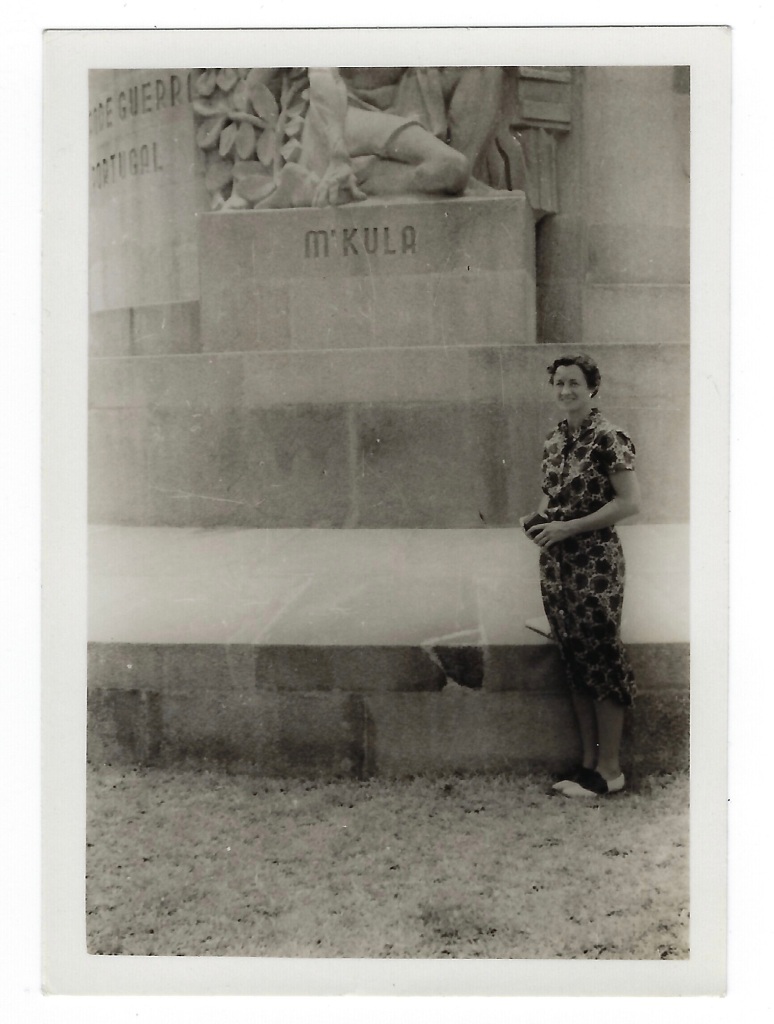
The back says “Mozambique, Lourenço Marques, At The Foot of the War Memorial”. Also, look at her cute shoes.
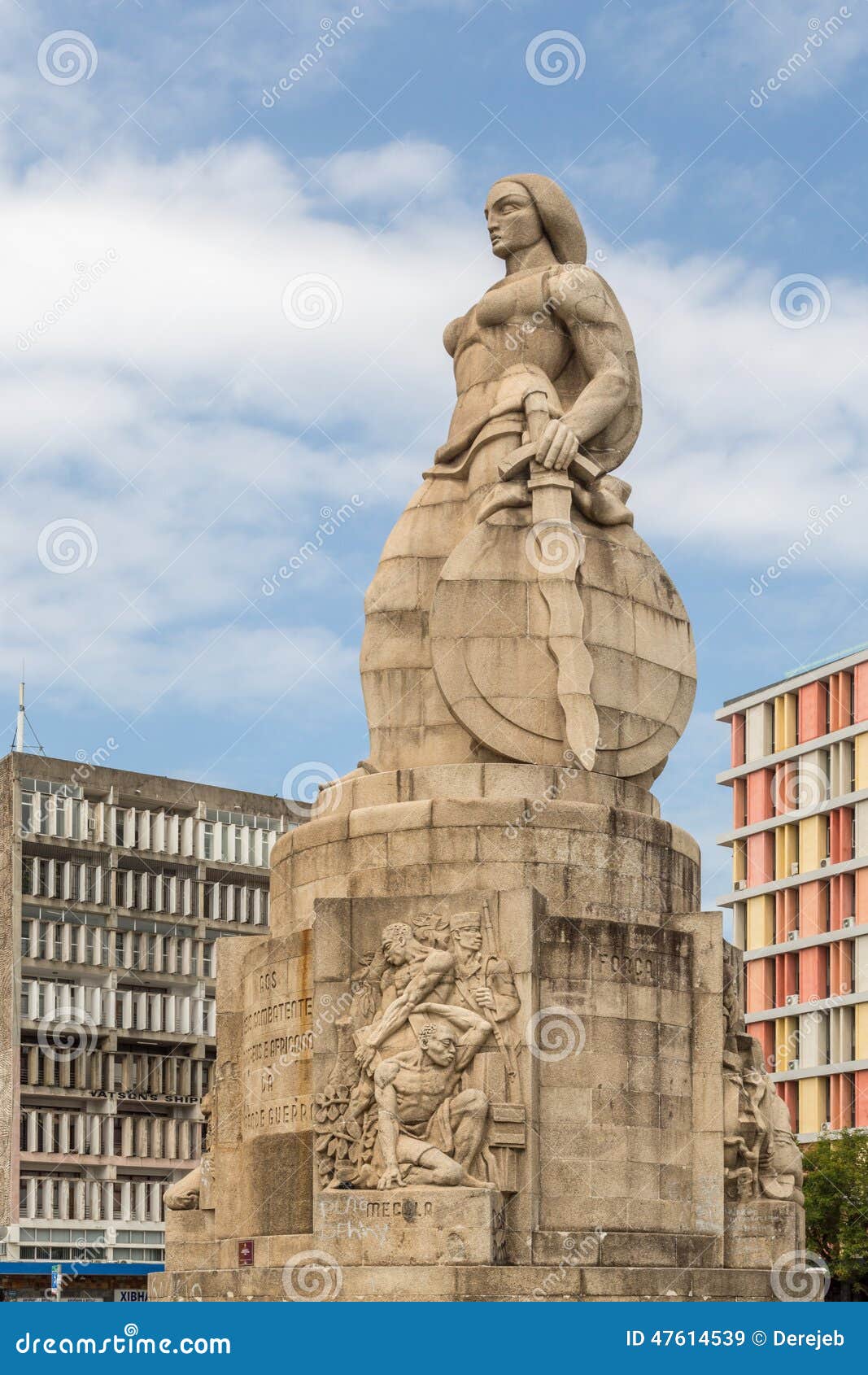
Shag and I to town - the war memorial across from the R.R. Station appealed to me as no other so far. An heroic figure of a woman on a round base with 4 fine plaques. 

Side note: The war memorial had its debut two years earlier, in 1935. Though a heroic figure of a woman indeed, it represented the Portuguese fending off Germans, and not struggles of the local people.

It was to be demolished as the city shed colonial relics, but it turned out too fortified, so it stayed. But over time, its significance changed to represent a strong woman fending off snakes in order to save locals, and she was deemed ‘The Snake Lady’, where she fends to this day.

The streets are wide, 3 flank-columns of red plumed royal poincianas standing at attention down the avenue. Most shops have roofs over the street - they're needed, for shade. The workers are prisoners, two men with ankles' chained together - clank, swish, clank - makes an ominous sound.

Side note: Mozambique had horrid colonial history and though slavery was abolished, prison labor doesn’t seem much different.

At 5:00 Shag and I taxied to the beach, made arrangement to be picked up at 11. Thunder and lightning and a full moon! Tropical rain. Shelter under a tin roof at a picnic table. The taxi did not come back - we walked back in 1 1/2 hours! - most amusing. But Shag was an hour late for his watch.

Side note: That beach date sounds like a plot for a romantic comedy, maybe even one with dance numbers in the rain?

Sat. Dec. 18: Lunch at Polana Hotel, high overlooking beach: prawns (like large shrimp, lobster flavor, delicious).

Side note: Her first prawn! I was also in my 30s the first time I had a prawn, but for different reasons than her.

Big wind blowing up as we drove back along the beach, and wavy as we returned to the ship. Up anchor at 7:00 p.m., got into swells that made us roll. 

Boat deck with Shag. One wave caught athwart boat deck spills over engine room ventilators. Bottles and dishes rattled back and forth all evening.

Side note: Athwart is a good word

Sun. Dec. 19: Read pages of "The Nile" to Shag.

Side note: Now she is reading The Nile TO Shag. A book about Egypt… where they want to motor off to together. So cute.

Beira

Mon. Dec. 20: Dawn in Beira. The anchor is swung from the bow and the anchor chain fastened to an enormous buoy. 

Took a tattered bus for sixpence over bumpy roads. Poked into several unattractive stores and just then the heavens opened, a deluge descended, wind blew, doors banged, glass broke. Shelter in a store until a taxi rescued us, took us to the Savoy Hotel. Lunch back to the ship, very wet - afternoon in Shag's room, reading. Typed cargo lists topside this evening, fascinating - timber, refrigerators, Ping-Pong tables, apples, wax, paint.

Side note: Her love of lists is endearing, and it has been passed down through the generations.

Tue. Dec. 21: a.m. on the boat deck, reading "The Nile" with Shag. I read him yards of figures: r.p.m., per day, per hour, generator, valves, etc. Reading in the hammock, a lovely day, wore shorts for the first time. Peered down #2 Hatch while rolls and crates of paper came swinging out on the lighters.

Side note: When I first read the second sentence above, I thought she meant she was reading to Shag the ‘…yards of figures’, like as pillow talk, which for them, could very well be. But then just below she says ‘more figures for Chief’ so most likely she was studying for Ship Shop (get it? like Wood Shop or Metal Shop in school, but about ships?). Whichever way, it’s cute.

And for our trivia for today: define ‘Lighters’ (in relation to shipping).

[Answer key: Lighters = a mini boat used to move stuff back and forth. Maybe its name derives from it being lighter than the boat it resides on??]

An amber moon cut off on top, sliced its way up thru clouds to sail off majestically into the soft black night

Sailed 6:00 p.m. More figures for Chief, then Shag. An amber moon cut off on top, sliced its way up thru clouds to sail off majestically into the soft black night. 

At Sea 

Wed. Dec. 22: Very hot in the sun. Engines stopped 1/2 hour during Shag's watch. Paced deck with S., wrote numerous cards, typed more cargo lists. Reading more "Nile" in p.m. with S. 

More abstract for Chief at 4:00, first scotch & soda visit topside after dinner - heard the news Frank Billings Kellogg is dead. 

To the boat deck, passed a vessel, saw the Morse light work for the first time, could read it, which was a bigger thrill. 

Another moon rise, a soft glow swelling to a crescendo of light, lines of cloud-like sooty brush strokes across the sky, the moon-path so bright as to seem elevated from the water. Slept out tonight with the moon in my eyes.

Side note: Frank Billings Kellogg helped usher in a bill (named after him) that would stop wars from being waged. You can ask the year 1945 how that went. But the bill was used to charge people responsible for the war with a Crime Against Peace (or Crime of Aggression) which was, ironically, punishable by death.

And that moon rise she watch from her outdoor hammock, I wish she’d bottled that so we could all live it.

Mozambique 

Side note: She’s been in Mozambique this whole post, but is now docking in Mozambique?? I, too, was confused. But it turns out Mozambique is the name of the country and a town in it. Welcome to Mozambique, Mozambique!

Thur. Dec. 23: Katy, Dreyer, Shag and I went ashore - 2 shillings round trip, paid a penny at the gate. The town different from any we've been - no motor traffic, narrow streets, phaeton hooded rickshaws, everything looks clean and newly washed, no wind to stir the dust. Buildings mostly built in long rows, houses distinguished from one another by the color - lovely sun-mellowed shades, crushed raspberry, dull gray-green, terra cotta, mild yellows. The triangles where streets come together with green grass plots and young flamboyance. The yellow wall and the palm trees against most glorious puffs of cumuli. The brick church with its white spire. 

Side note: Pottery Barn must have a color called ‘sun-mellowed’, no? And ‘crushed raspberry’? But maybe not ‘dull gray-green’. She was on a tear in that paragraph — the ‘young flamboyance’ of the street corners. ‘Puffs of cumuli’ clouds.

The walk along the beach, the avenue of tall spreading trees with poincianas in between. Looking up thru the lace patterns of the leaves and the flame-red blossoms toward the sun. The marble war memorial "Aos Mortes da Grande Guerra", the ancient bullet scarred fort (1502) its iron gates swung open. Inside-barred doors hanging open while prisoners scarcely guarded carried plates of black beans and rice form the line at the mess hall door some patch of shade for lunch. In one corner of the hot open square a small chapel, one door for "Europeaos", the other for natives. 

Side note: Separate doors in a church?? How so very pious of you, Europeaos.

Back to the ship, the P.O. closed 11:00 — 2:00 for siesta — "for only mad dogs and Englishmen go out in the noonday sun", and it was hot! Not humid, like Beira, but blazing white heat — the Portuguese wouldn't let me go ashore without a toupee, borrowed one of Shag's. Under way at 1:00 p.m. along the beach the most vivid apple green water I've ever seen, over coral reefs and dark green water until we'd cleared the bay. Most gorgeous banks of cloud and on the water the exotic touch of lateen sails. One running before the wind like an enormous bird, wings spread. On a coral reef right off the light hangs a freighter much like ours, abandoned last October. S. and I decide not to see so much of each other. 

Side note: So first… WHAT!?!? I’ve read all this before and kind of remember that last sentence, but don’t remember it being so matter of fact. It even has the same measured handwriting as all else (her handwriting is tidy, to say the least). My journal would have had one of two things woven into that sentence: a weak, pained chicken-scratch or an heavy-hearted bold. And in both cases, a splash or two of wine. Maybe she was doing the breaking off and Shag is off somewhere with a wine stained journal?? Stay tuned!

Lastly, that song lyric is from by Noel Coward and is about traveling near where she is traveling, but oooh boy the lyrics are a lot dated.